The only story that rivals the complex nature of the Grail legends is that of the war between the kings of France and England during the peak of the Crusades. Catholic Christians lost the Holy Land and Jerusalem to the Saracens because of this inter Christian rivalry born from the marriage of Eleanor of Aquitaine to King Louis of France and later, King Henry of England.
An added layer of intrigue has to do with the Great Schism between Greek Orthodox and Latin Catholic Christians that occurred in 1054. The Eastern and Western parts of the Roman Empire split as far back as the early fifth century when Rome was invaded by the Visigoths in 410 AD, the first time in 800 years that the city came under foreign control. Many of the legends related to the rumored treasures buried in the vicinity of Rennes-le-Chateau stems from the sacking of Rome by the Visigoths. They occupied parts of Southwestern France and ultimately ended up as rulers of the Iberian peninsula until the Muslim conquest in 711 AD. The Visigoths were initially Arian Christians, not Trinitarian Christians.
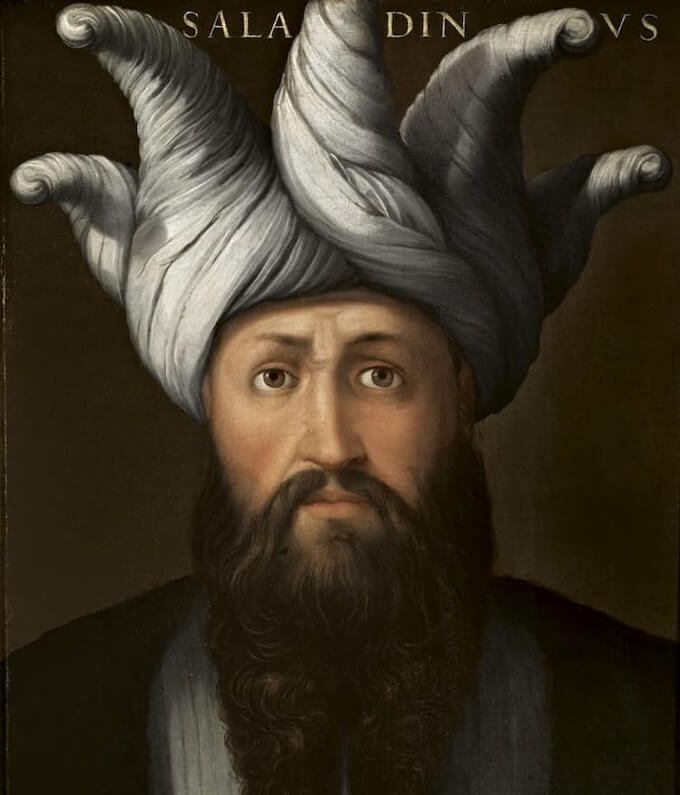
Although the Third Crusade (1189-1192) led by Richard the Lionheart, Philip Augustus, and the Holy Roman Emperor Frederick I, made some gains in the Holy Land, they ultimately failed in recapturing Jerusalem from the Muslim Sultan, Saladin. The Holy City fell in 1187, a mere 88 years after being captured by the Crusaders in 1099. Both Philip of France and the German contingent left the battlefield early, forcing Richard to battle Saladin on his own. Richard understood that his lands were exposed with Philip returning to France, a fear that was well founded.
The failure of the Crusade led to Pope Innocent III calling for a Fourth Crusade in 1198, with devastating consequences for Christendom. Instead of liberating Jerusalem, the Venetian and Frankish Crusaders attacked the Catholic city of Zara in 1202, the first time Catholic Crusaders laid siege to a Catholic city. Not all the Crusaders joined the siege, a notable exception being Simon de Montfort.
To add insult to injury, the Crusaders decided to attack Constantinople in 1204, capital of the Byzantine Empire. Not only were the Byzantines fellow Christians (Eastern Orthodox), but it was the nature of the siege that shocked Europe. Churches, monasteries, and convents were attacked. Nuns were raped and brutalised, priests slaughtered, and precious art and icons destroyed and stolen.
The Latin Empire was created from the ruins and lasted from 1204-1261, with the first Latin Emperor being Baldwin I, husband of Marie of Champagne. Marie was the granddaughter of Eleanor of Aquitaine, the first Latin Empress of Constantinople. Although the Byzantine Empire would kick the Latins out, it would never recover and ultimately fell to the Ottoman Empire in 1453. Rome finally stood alone as the undisputed ruler of Christendom, that was until the Reformation tore up the script in 1517.
Let us return to Simon of Montfort, the reluctant Crusader that refused to attack Zara because they were fellow Catholics. He had no such qualms when he led the Albigensian Crusade of Northern French Barons against the Cathars of Southern France (1209-1229). Although Philip Augustus did not actively participate, he supported the aims of the Barons as it would ultimately benefit his plans to expand the French kingdom southward.
First the Latin Catholics attacked fellow Catholics in 1202, then Byzantine Christians in 1204, and finally the Cathars in 1209. These three atrocities changed the politics of France, Europe, Asia Minor, and the Holy Land for centuries to come.
Erico Dandolo was the Doge of Venice who preached a Crusade and encouraged the attacks on both Zara and Constantinople.