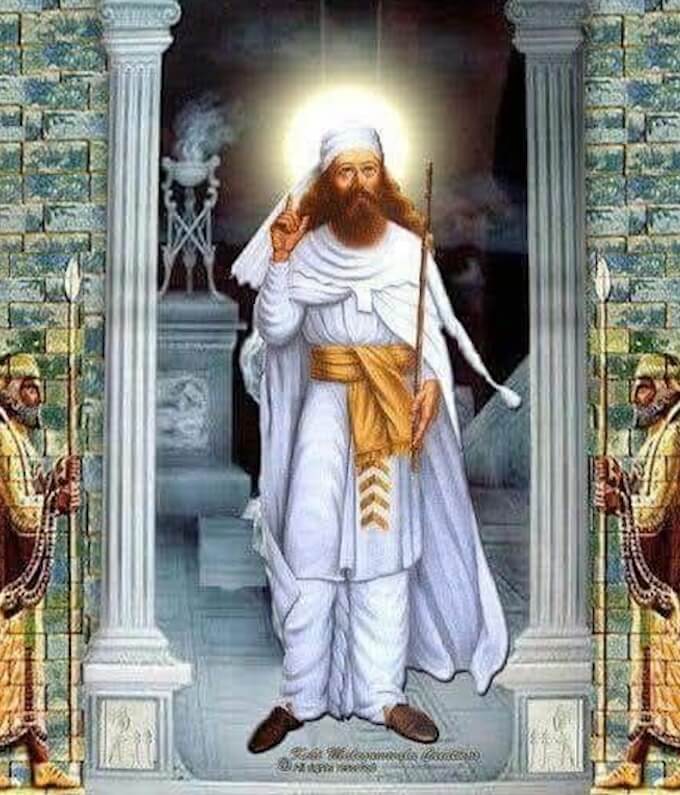
The first records of Zoroastrianism date from the sixth century BCE, but is most probably much older. Zoroastrianism was the state religion of successive Persian/Iranian Empires until the Muslim conquest in the seventh century CE. It was around the same time that the Buddha reformed Hinduism, something the priest Zoroaster also did regarding Persian polytheism by introducing the highest God, Ahura Mazda. Both Pythagoras in Greece, and Laozi/ Lao Tzu in China, the founder of Taoism lived during this period of reformation.
What makes Zoroastrianism so fascinating to study is the remarkable similarities between the Apocalyptic beliefs found in Christianity and the Iranian religion. Both teach that a Great War, the Final Renovation, will lead to the ultimate destruction of evil at the End of Time. Judgement plays a huge role, as does free will and the belief in a Messiah like figure referred to as, Saoshyant. They even believe that a virgin will give birth to the final saviour of the world.
The passages below come from Wikipedia as they best explain the core beliefs under discussion:
– Frashokereti is the Avestan language term for the Zoroastrian doctrine of a final renovation of the universe, when evil will be destroyed, and everything else will be then in perfect unity with God (Ahura Mazda).
The doctrinal premises are (1) good will eventually prevail over evil; (2) creation was initially perfectly good, but was subsequently corrupted by evil; (3) the world will ultimately be restored to the perfection it had at the time of creation; (4) the “salvation for the individual depended on the sum of [that person’s] thoughts, words and deeds, and there could be no intervention, whether compassionate or capricious, by any divine being to alter this.” Thus, each human bears the responsibility for the fate of his own soul, and simultaneously shares in the responsibility for the fate of the world.
At the end of the “third time” (the first being the age of creation, the second of mixture, and the third of separation), there will be a great battle between the forces of good (the yazatas) and those of evil (the daevas) in which the good will triumph. On earth, the Saoshyant will bring about a resurrection of the dead in the bodies they had before they died. This is followed by a last judgment through ordeal.
The yazatas Airyaman and Atar will melt the metal in the hills and mountains, and the molten metal will then flow across the earth like a river. All mankind—both the living and the resurrected dead—will be required to wade through that river, but for the righteous (ashavan) it will seem to be a river of warm milk, while the wicked will be burned. The river will then flow down to hell, where it will annihilate Angra Mainyu and the last vestiges of wickedness in the universe. In later Zoroastrian texts, it is written that the molten metal will purify the wicked.
The righteous will partake of the parahaoma, which will confer immortality upon them. Thereafter, humankind will become like the Amesha Spentas, living without food, without hunger or thirst, and without weapons (or possibility of bodily injury). The material substance of the bodies will be so light as to cast no shadow. All humanity will speak a single language and belong to a single nation without borders. All will share a single purpose and goal, joining with the divine for a perpetual exaltation of God’s glory. –
Depiction of Zoroaster inside the Fire Temple, Yazd, Iran.