Almost 2000 years after it was first constructed, the Pantheon in Rome remains the world’s largest unreinforced concrete dome. Built by the Roman Emperor Hadrian in 126 AD, the Pantheon was given to Pope Boniface IV in 609 AD by Byzantine Emperor Phocus.
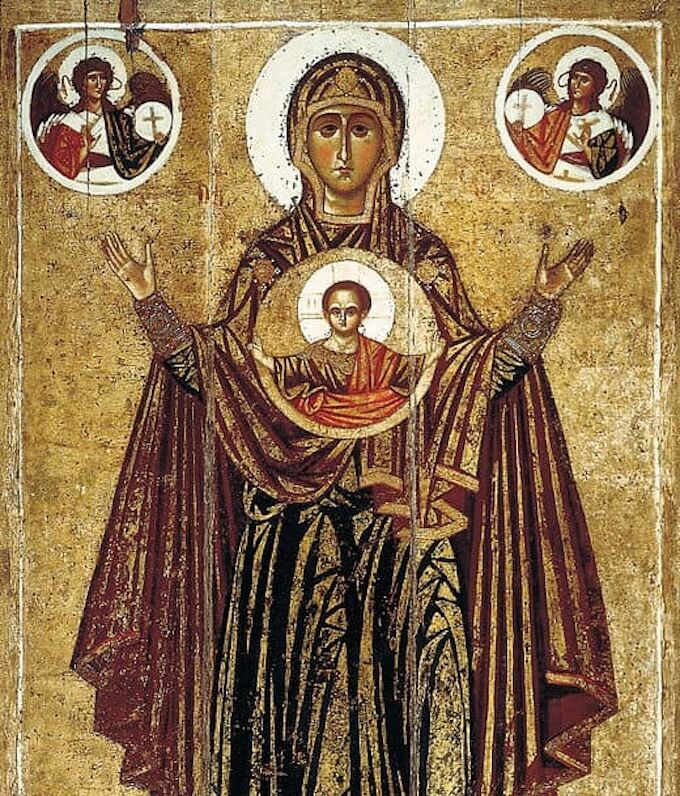
Boniface changed the building from a temple dedicated to all gods, Pantheon, to the Basilica of St. Mary and the Martyrs. Panagia is another name for the Theotokos, Mary, the Mother of God. Pan = all, hagios = holy. The All Holy Directress.
The Pantheon is the archetypal monolithic dome and inspired countless other domes. Hagia Sophia in Constantinople – 536 AD, Dome of the Rock in Jerusalem – 691, Florence Cathedral – 1436, St. Peter’s Basilica in Rome – 1626, St. Paul’s Cathedral in London – 1710, United States Capitol Dome in Washington DC – 1866, Mosta Dome in Malta – 1871.
Yet with all the progress made in science, technology, and architecture, the Pantheon stands alone as the largest unreinforced concrete dome in the world.
To add insult to injury, the Pantheon was designed so that a perfect sphere spanning some 43 metres across fits snugly inside the structure. It is the most extraordinary example of spherical consciousness that seemingly defies gravity and the laws of nature.
A circle with a dot inside is called the circumpumct, a very ancient symbol representing a wide variety of concepts. A symbol of gold in ancient alchemy, the midday sun and Ra in Egyptian religion, and the Monad/God in Pythagorean philosophy.
Scholars have interpreted the Pantheon to be dedicated to pan/all, theon/gods, all the gods. This theory is debatable as an alternative interpretation could be more akin to, All-is-God.
– Pantheism is the philosophical and religious belief that reality, the universe, and nature are identical to divinity or a supreme entity. The physical universe is thus understood as an immanent deity, still expanding and creating, which has existed since the beginning of time. The term pantheist designates one who holds both that everything constitutes a unity and that this unity is divine, consisting of an all-encompassing, manifested god or goddess. All astronomical objects are thence viewed as parts of a sole deity. – WIKIPEDIA
Dorian Sagan, the son of scientist Carl Sagan, said the following. “My father believed in the God of Spinoza and Einstein, God not behind nature, but as nature, equivalent to it.”
Abrahamic religions teach that God is transcendent, separate from creation/existence.
– In the religio-philosophical Hermetica, the ultimate reality is called by many names, such as God, Lord, Father, Mind (Nous), the Creator, the All, the One, etc. In the Hermetic view, God is both the all (Greek: to pan) and the creator of the all: all created things pre-exist in God and God is the nature of the cosmos (being both the substance from which it proceeds and the governing principle which orders it), yet the things themselves and the cosmos were all created by God. Thus, God (‘the All’) creates itself, and is both transcendent (as the creator of the cosmos) and immanent (as the created cosmos). These ideas are closely related to the cosmo-theological views of the Stoics. – WIKIPEDIA
IMMANENT. TRANSCENDENT. TRANSCENDENT AND IMMANENT.
Art Giovani Paolo Panini 18th century.