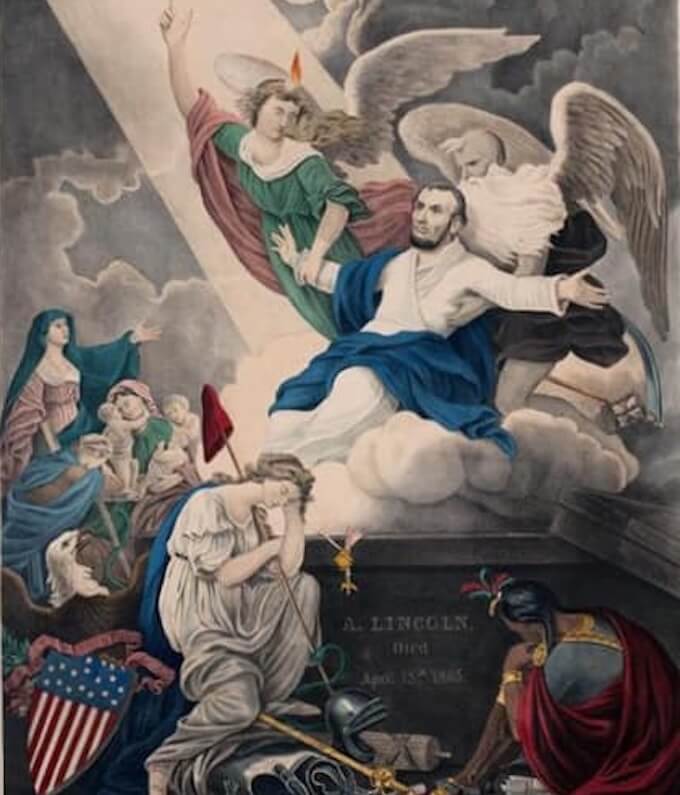
Before the Hellenistic period, imperial cults were known in ancient Egypt (pharaohs) and Mesopotamia (from Naram-Sin through Hammurabi). In the New Kingdom of Egypt, all deceased pharaohs were deified as the god Osiris, having been identified as Horus while on the throne, and sometimes referred to as the “son” of various other deities.
Instead of the word “apotheosis”, Christian theology uses in English the words “deification” or “divinization” or the Greek word “theosis”. Pre-Reformation and mainstream theology, in both East and West, views Jesus Christ as the preexisting God who undertook mortal existence, not as a mortal being who attained divinity (a view known as adoptionism).
It holds that he has made it possible for human beings to be raised to the level of sharing the divine nature as 2 Peter 1:4 states that he became human to make humans “partakers of the divine nature”. In John 10:34, Jesus referenced Psalm 82:6 when he stated “Is it not written in your Law, I have said you are gods?”
Other authors stated: “For this is why the Word became man, and the Son of God became the Son of man: so that man, by entering into communion with the Word and thus receiving divine sonship, might become a son of God.” “For He was made man that we might be made God.” “The only-begotten Son of God, wanting to make us sharers in his divinity, assumed our nature, so that he, made man, might make men gods.”
In Eastern Orthodox theology, Theosis is the transformation of oneself in union with God. The theosis transformation includes a purification of the body and mind (catharsis), an illumination via a vision of God (theoria). In Eastern Christianity, the purpose of human life is theosis. According to Hierotheos (Vlachos), this process is based on direct spiritual insight (gnosis) rather than the rational thought or intellectual and academic pursuits primary in Western Christian traditions.
Wikipedia: