POSTLIBERAL NATIONAL CONSERVATISM: – Postliberalism is a political philosophy that critiques and opposes liberalism, particularly as it developed in the late 20th and early 21st centuries. Postliberals advocate for a communitarian approach that emphasizes social conservatism and social solidarity, often drawing on traditionalist conservative and religious frameworks. They are generally skeptical of liberal individualism, instead viewing individuals as being connected to networks of obligations within families, communities, tribes, and religious institutions.
Postliberal thinkers support a greater role for the state in influencing culture and reinforcing shared values. The movement is associated with ideas such as economic nationalism, localism, and criticism of liberal democracy.
THE ‘COMMON’ GOOD: Postliberals argue that the liberal emphasis on individual rights and freedoms has diminished the roles of community, family, and tradition in fostering meaning and belonging. They posit that a stable society requires a shared sense of purpose and commitment to the common good, which they claim liberalism has not sufficiently provided.
Postliberals critique the liberal conception of the state as a neutral mediator, arguing instead that it should actively promote a vision of an ideal vision of social well-being grounded in the values and traditions of the community it serves. They advocate for policies opposing immigration and cultural diversity while preserving institutions like the family, religion, and local associations while opposing policies that encourage immigration and cultural diversity.
Elements of postliberal political thought have been integral to the development of national conservatism and the ideology of various factions within the Conservative Party of the United Kingdom. Analysts have also identified Catholic social teaching as a significant influence on postliberalism.
Hungarian Prime Minister Viktor Orbán and his political party, Fidesz, have been described as postliberal and national conservative. In a speech on September 14, 2023, Orbán stated: “The postliberal era we look forward to, which will replace the current progressive-liberal era, will not come automatically. Someone has to make it happen. And who will make it happen, if not us?”
TRUMPISM: National conservatism is a nationalist variant of conservatism that concentrates on upholding national and cultural identity, communitarianism and the public role of religion. It opposes the basic precepts of enlightenment liberalism such as individualism and the universality of human rights, and in America and Europe is majoritarian populist.
National conservatives usually combine conservatism with nationalist stances, emphasizing cultural conservatism, family values and opposition to illegal immigration or opposition to immigration per se. National conservative parties often have roots in environments with a rural, traditionalist or peripheral basis, contrasting with the more urban support base of liberal conservative parties.
In Europe, national conservatives usually embrace some form of Euroscepticism. In post-communist central and eastern Europe specifically, most conservative parties since 1989 have followed a national conservative ideology. Most notable is Viktor Orbán in Hungary, who has explicitly described his Fidesz’s ideology as being national conservative in character and whose government is involved in the funding and spread of national conservative institutions across Europe and the United States.
In the United States, Trumpism can be considered a variety of national conservatism, which also gives its name to the National Conservatism Conference, organised by the Edmund Burke Foundation. National conservatism was recently re-launched by Israeli-American political philosopher and Biblical scholar Yoram Hazony, with his 2022 book Conservatism: A Rediscovery.
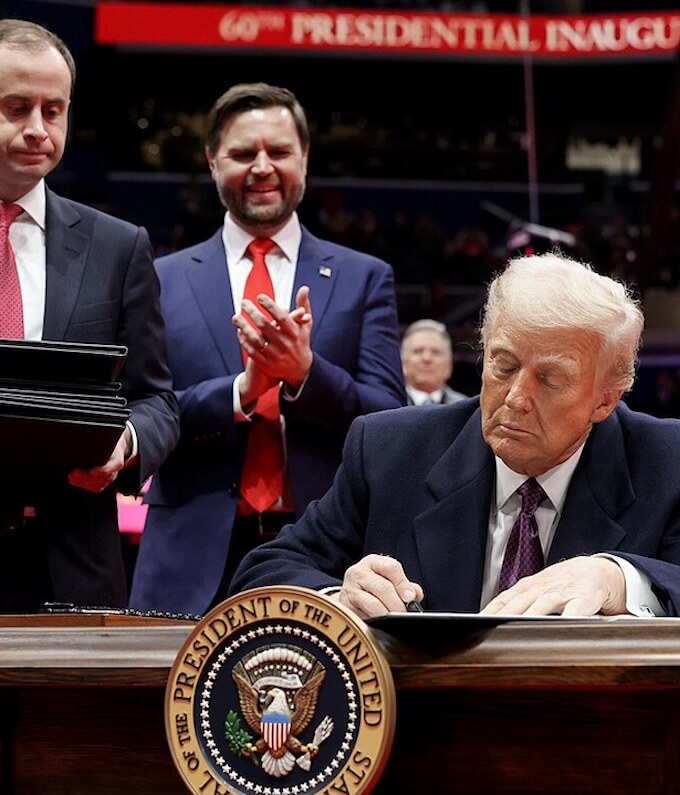
Hazony has written that “In the political arena, conservatism refers to a standpoint that regards the recovery, restoration, elaboration, and repair of national and religious traditions as the key to maintaining a nation and strengthening it through time.” In the United States, several Republican politicians have been linked to postliberal and national conservative ideas, including Vice President JD Vance, Senator Josh Hawley and Secretary of State, Marco Rubio. – Wiki – Victor Orban of Hungary.
Apr 23, 2025 3:56:40 pm


