HOLY RUS – MOSCOW, THE NEW ROME: – is a theological and political concept asserting Moscow as the successor to ancient Rome, with the Russian world carrying forward the legacy of the Roman Empire. The term “third Rome” refers to a historical topic of debate in European culture originating in Eastern Orthodox circles: the question of the successor city to the “first Rome” (Rome, within the Western Roman Empire) and the “second Rome” (Constantinople, within the Eastern Roman Empire)
Social policy and state doctrine – according to which the Moscow Prince should act as a supreme ruler (Sovereign and legislator) of Christian Eastern Orthodox nations and become a defender of the Christian Eastern Orthodox Church. Herewith the Church should facilitate the Sovereign in execution of his function supposedly determined by God, the autocratic administration.
Within decades after the capture of Constantinople by Mehmed II of the Ottoman Empire on 29 May 1453, some Eastern Orthodox people were nominating Moscow as the “Third Rome”, or the “New Rome”.
Metropolitan Zosima, in a foreword to his work of 1492 Presentation of the Paschalio, quite clearly expressed it, calling Ivan III “the new Tsar Constantine of the new city of Constantine — Moscow.” This idea is best known in the presentation of the monk Philotheus of the early 16th century:
– So know, pious king, that all the Christian kingdoms came to an end and came together in a single kingdom of yours, two Romes have fallen, the third stands, and there will be no fourth. No one shall replace your Christian Tsardom according to the great Theologian. –
HOLY RUS: The Moscow scholars explained the fall of Constantinople as the divine punishment for the sin of the Union with the Catholic Church, but they did not want to obey the Patriarch of Constantinople.
Having lost its Christian basileus after the Turkish conquest, Constantinople as a center of power lost a significant part of its authority. On the contrary, the Moscow rulers soon began to consider themselves real Tsars (this title was already used by Ivan III), and therefore according to them the center of the Eastern Orthodox Church should have been located in Moscow, and thus the bishop of Moscow should become the head of the Orthodox.
The Orthodox faith was central to Byzantine notions of their identity and what distinguished them from “barbarians”. As the preeminent Orthodox nation following the Byzantine collapse, Moscow would view itself as the empire’s logical successor.
The Russian world is ecclesiastical in its form, but geopolitical in its essence; it is a concept that was put forward in a keynote speech on November 3, 2009, by Patriarch Kirill of Moscow which he described as a “common civilisational space” of countries sharing Eastern Orthodoxy, Russian culture and language, and a common historical memory. The “Russian world” under the Patriarch Kirill focused only on the Eastern Slavic countries of Eastern Europe; that is, on Ukraine and Belarus, while leading the Russian Orthodox Church to isolate itself. – Wiki –
THE GREAT SCHISM: Eastern Orthodoxy, otherwise known as Eastern Orthodox Christianity or Byzantine Christianity, is one of the three main branches of Chalcedonian Christianity, alongside Roman Catholicism and Protestantism.
The Eastern Orthodox Church is decentralised, having no central authority, earthly head or a single bishop in a leadership role. Thus, the Eastern Orthodox use a synodical system canonically, which is significantly different from the hierarchical organisation of the Catholic Church that follows the doctrine of papal supremacy.
Following Justinian, the church existed only as a single denomination of five communing churches ruled by five patriarchs: the bishops of Rome, Constantinople, Alexandria, Antioch, and Jerusalem, collectively referred to as the Pentarchy. Each of the five patriarchs had jurisdiction over bishops in a specified geographic region which did not overlap with the jurisdiction of another patriarch.
Historically, the Patriarch of Rome was considered to be the “first in place of honor” among the five patriarchs. Disagreement about the limits of his authority was one of the causes of the Great Schism, conventionally dated to the year 1054, which split the previously unified Church into the Roman Catholic Church in the West, headed by the Pope, and the Orthodox Catholic Church (more commonly known today as the Eastern Orthodox Church), led by the four eastern patriarchs.
After the schism, the honorary primacy of the Bishop of Rome shifted to the Patriarch of Constantinople, who had previously been accorded second-place rank at the First Council of Constantinople.
In the 5th century, Oriental Orthodoxy separated from Chalcedonian Christianity (and is therefore separate from both the Eastern Orthodox Church and Roman Catholic Church), well before the 11th century Great Schism. It should not be confused with Eastern Orthodoxy or Roman Catholicism.
AUTOCEPHALOUS UKRAINE: There are a total of 17 autocephalous Eastern Orthodox churches which are recognized to various degrees among the communion of the Eastern Orthodox Church.
The Ukrainian Orthodox Church (UOC), commonly referred to by the exonym Ukrainian Orthodox Church of the Moscow Patriarchate (UOC-MP), is an Eastern Orthodox church in Ukraine.
The Ukrainian Orthodox Church was officially formed in 1990 in place of the Ukrainian Exarchate of the Russian Orthodox Church (ROC), under the leadership of Metropolitan Filaret, as the Ukrainian branch of the Russian Orthodox Church.
On 27 May 2022, following a church-wide council in Kyiv, the Ukrainian Orthodox Church announced its full independence and autonomy from the Moscow Patriarchate. The council made this decision in protest of the February 2022 Russian invasion of Ukraine, and particularly in response to Russian Orthodox Church head Patriarch Kirill’s support for the invasion.
Since the Unification Council on 15 December 2018 which formed the OCU, the Ecumenical Patriarchate of Constantinople has disputed the claims by the Moscow Patriarchate of its ecclesiastical jurisdiction over the territory of Ukraine.
The Russian Orthodox Church does not currently recognize a change in their relationship to the UOC. However, in June 2023 ROC hierarch Metropolitan Leonid (Gorbachev) of Klin, scorned the UOC’s decision to separate from the Moscow Patriarchate, saying, “When the opportunity presented itself to get out from under the wing of Moscow, they did it,” and declared that the ROC would absorb the UOC’s dioceses in Russian occupied areas of Ukraine.
On 20 August 2024, the Verkhovna Rada banned the Russian Orthodox Church by adopting the Law of Ukraine “On the Protection of the Constitutional Order in the Field of Activities of Religious Organizations”. Ukrainian religious organizations affiliated with the ROC will have nine months to break off its relations with the Patriarchate of Moscow in accordance with the Canon law of the Eastern Orthodox Church. – Wiki –
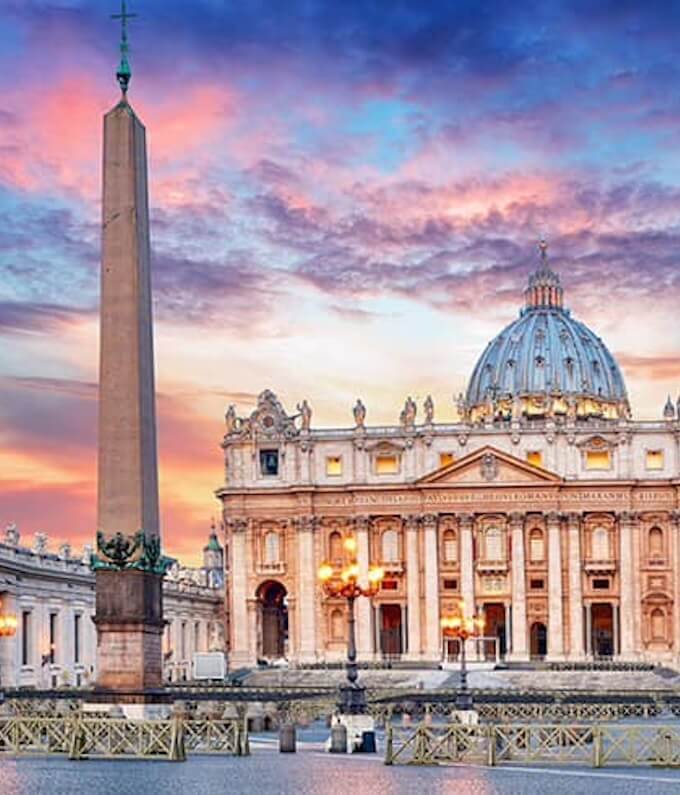
Christ the Savior Moscow. Hagia Sophia Istanbul. St Peter’s Rome.
Apr 28, 2025 10:52:56 pm


