Party drug MDMA may have protected survivors of Nova attack from trauma, study suggests.
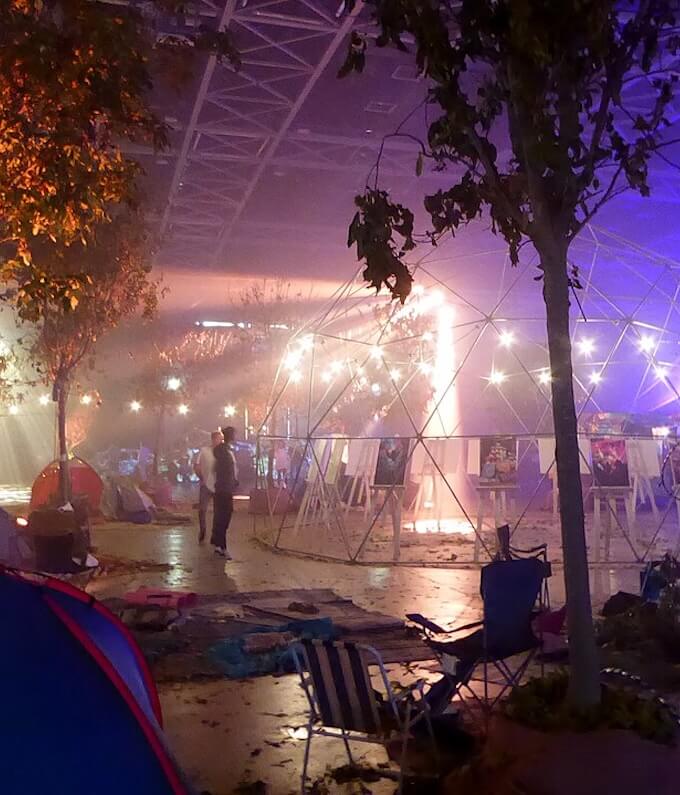
As dawn approached on the morning of 7 October 2023, many of the partygoers at the Nova music festival near Gaza’s border took illegal recreational drugs like MDMA or LSD. Hundreds of them were high when, shortly after sunrise, Hamas gunmen attacked the site.
Now neuroscientists working with survivors from the festival say there are early signs that MDMA – also known as ecstasy or molly – may have provided some psychological protection against trauma.
The preliminary results, currently being peer-reviewed with a view to publication in the coming months, suggest that the drug is associated with more positive mental states – both during the event and in the months afterwards.
The study, carried out by scientists at Israel’s Haifa University, could contribute to a growing scientific interest in how MDMA might be used to treat psychological trauma.
It is thought to be the first time scientists have been able to study a mass trauma event where large numbers of people were under the influence of mind-altering drugs.
Hamas gunmen killed 360 people and kidnapped dozens more at the festival site where 3,500 people had been partying.
“We had people hiding under the bodies of their friends for hours while on LSD or MDMA,” said Prof Roy Salomon, one of those leading the research.
“There’s talk that a lot of these substances create plasticity in the brain, so the brain is more open to change. But what happens if you endure this plasticity in such a terrible situation – is it going to be worse, or better?”
The research tracked the psychological responses of more than 650 survivors from the festival. Two-thirds of these were under the influence of recreational drugs including MDMA, LSD, marijuana or psilocybin – the compound found in hallucinogenic mushrooms – before the attacks took place.
“MDMA, and especially MDMA that was not mixed with anything else, was the most protective,” the study has found, according to Prof Salomon. He said those on MDMA during the attack appeared to cope much better mentally in the first five months afterwards, when a lot of processing takes place.
“They were sleeping better, had less mental distress – they were doing better than people who didn’t take any substance,” he said.
The team believes pro-social hormones triggered by the drug – such as oxytocin, which helps promote bonding – helped reduce fear and boost feelings of camaraderie between those fleeing the attack.
And even more importantly, they say, it appears to have left survivors more open to receiving love and support from their families and friends once they were home. Clearly, the research is limited only to those who survived the attacks, making it hard to determine with any certainty whether specific drugs helped or hindered victims’ chances of escape.
But researchers found that many survivors, like Michal Ohana, firmly believe it did play a role – and say that belief, in itself, may help them to recover from the event.
“I feel like it saved my life, because I was so high, like I’m not in the real world,” she told me. “Because regular humans can’t see all these things – it’s not normal.” Without the drug, she believes she would have just frozen or collapsed to the floor, and been killed or captured by the gunmen.
Clinicians in various countries have already experimented with MDMA-assisted psychotherapy for Post-Traumatic Stress Disorder (PTSD) in a trial setting – though only Australia has approved it as a treatment.
Countries that have rejected it include the US, where the Food and Drug Administration cited concerns about the design of the studies, that the treatment may not offer long-lasting benefits, and about the potential risk for heart problems, injury and abuse.
MDMA is classified as a Class A drug in the UK, and has been linked to liver, kidney and heart problems.
In Israel, where MDMA is also illegal, psychologists can only use it to treat clients on an experimental research basis. The preliminary findings from the Nova study are being closely followed by some of those Israeli clinicians experimenting with MDMA as treatment for PTSD after 7 October.
Dr Anna Harwood-Gross, a clinical psychologist and director of research at Israel’s Metiv Psychotrauma Centre, described the initial findings as “really important” for therapists like her.
She is currently experimenting with using MDMA to treat PTSD within the Israeli military, and had worried about the ethics of inducing a vulnerable psychological state in clients when there is a war going on.
“At the beginning of the war, we questioned whether we were able to do this,” she said. “Can we give people MDMA when there’s a risk of an air raid siren? That’s going to re-traumatise them potentially. This study has shown us that even if there’s a traumatic event during therapy, the MDMA might also help process that trauma.”
Dr Harwood-Gross says early indications of therapeutic MDMA use are encouraging, even among military veterans with chronic PTSD.
It has also upended old assumptions about the “rules” of therapy – especially the length of sessions, which have to be adjusted when working with clients under the influence of MDMA, she says.
“For example, it’s changed our thoughts about 50-minute therapy sessions, with one patient and one therapist,” Dr Harwood-Gross told me. “Having two therapists, and long sessions – up to eight hours long – is a new way of doing therapy. They’re looking at people very holistically and giving them time.” She says this new longer format is showing promising results, even without patients taking MDMA, with a success rate of 40% in the placebo group.
Israeli society itself has also changed its approach to trauma and therapy following the 7 October attacks, according to Danny Brom, a founding director of the METIV Psychotrauma Centre at Herzog Hospital in Jerusalem, and a senior figure in the industry.
“It’s as if this is the first trauma we’re going through,” he said. “I’ve seen wars here, I’ve seen lots of terrorist attacks and people said, ‘We don’t see trauma here’.
“Suddenly, there seems to be a general opinion that now everyone is traumatised, and everyone needs treatment. It’s a wrong approach.”
What broke, he said, is the sense of security many Jews believed Israel would provide them. These attacks uncovered a collective trauma, he says, linked to the Holocaust and generations of persecution.
“Our history is full of massacres,” psychologist Vered Atzmon Meshulam told me. “As a psychologist now in Israel, we are faced with an opportunity to work with lots of traumas that weren’t previously being treated, like all our narratives for 2,000 years.”
Collective trauma, combat trauma, mind-altering drugs, sexual assault, hostages, survivors, body-collectors, the injured and the bereaved – Israel’s trauma specialists are facing a complex cocktail of issues from the clients now flooding into therapy.
The scale of that mental health challenge is mirrored in Gaza, where vast numbers of people have been killed, injured or left homeless after a devastating 15-month war – and where there are scant resources to help a deeply traumatised population.
The war in Gaza, triggered by the Hamas attacks on Israeli communities in October 2023, was suspended in January in a six-week truce, during which Israeli hostages held by Hamas were exchanged for Palestinian prisoners in Israeli jails.
But there is little sense on either side that the peace and security needed to begin healing has arrived. The truce expired last weekend, with 59 Israeli hostages still in Hamas captivity. Many Gazans are waiting, with their bags packed, for war to resume.
Meanwhile Nova survivor Michal Ohana says she feels that with the passage of time, some are expecting her to have moved on from the attacks, but she is still affected.
“I wake up with this, and I go to sleep with this, and people don’t understand,” she told me.
“We live this every day. I feel the country supported us in the first months, but now after one year, they feel: ‘OK, you need to go back to work, back to life.’ But we can’t.”
Article by Lucy Williamson for BBC: Additional reporting by Oren Rosenfeld and Naomi Scherbel-Ball.
Mar 09, 2025 8:18:28 pm
Holy Incongruence added 3 new photos.
Mobile uploads
Mobile uploads
Mobile uploads
THE PROMISE OF JUDGMENT DAY: Explain this to me. The President of Ukraine has been accused of being a dictator because the country has not held elections during wartime, something which is completely normal, the United Kingdom did the same during WW2.
Yet Benjamin Netanyahu is refusing to authorize a State Commission of Inquiry into the October 7 attacks. No Israeli will have to risk their lives by going to the polls, in fact the Supreme Court will nominate someone to lead the investigation. I’ve not heard a peep from JD Vance or anyone else about this obvious Incongruence. Do as I say not as I do. A bit like the – it’s ok for Elon not to wear a suit to the Oval Office, but Zelensky, how dare he?
So to work around this obstinance and dereliction of duty, both the Israeli Defense Force and Shin Bet, the Israeli spy agency, published reports just this week detailing the failures of the government to protect their people.
Everybody knows Netanyahu has extended the war to achieve two major aims. Firstly to avoid multiple corruption charges against himself, his wife, and his son. Secondly to avoid taking responsibility for the obvious security failures of October 7.
Netanyahu was single handedly responsible for six months of sustained protests against his government for trying to overthrow the Supreme Court in the lead up to 7/10. I highly recommend the BIBI Files documentary to better acquaint yourself with his character.
For those of you wanting to understand what is really going on, read the articles below. The main points are – Israel allowed millions of dollars to flow into the coffers of Hamas. They knew about the planned attack as early as 2018. Israel moved soldiers away from Gaza, leaving the border exposed. Israel ignored multiple signs of an imminent attack. The IDF admitted that they killed Israelis as they struggled to distinguish between Hamas and their own people.
Israel under the leadership of Netanyahu has committed countless war crimes in the name of God, countless. Will America support them as they plan on committing even more? Only time will tell.
WHAT WENT WRONG? Israel’s spy agency lists failures in preventing Oct. 7 attack. Haaretz – Daniel Estrin.
TEL AVIV, Israel – Hamas code-named it – The Promise of Judgement Day. As early as 2018, Israel caught wind of Hamas’ battle plan to invade Israel from neighboring Gaza. But Israel’s domestic intelligence agency did not consider it a realistic threat.
▪ Israel had obtained intelligence of Hamas’ battle plans in two iterations, once in 2018 and another in 2022, but the agency did not translate it into an actionable threat. A series of signs in the months leading up to the Oct. 7, 2023 attack was dismissed.
That is the main conclusion of an investigation by Israel’s Shin Bet agency into the colossal security failure of the Hamas-led attack on Oct. 7, 2023. It was the single deadliest day in Israeli history, when thousands of Palestinian attackers killed nearly 1,200 people and took 251 people hostage.
This is the first inquiry by Israel’s main agency tasked with spying on Hamas into why Israel failed to detect and prevent the attack, following another inquiry by Israel’s military.
The Shin Bet hinted at failures by Israel’s political leadership to carry out the agency’s desire to assassinate senior Hamas leaders, and blamed Israeli policies of propping up Hamas rule in Gaza to buy calm on its border.
In an unusual move for the organization, the Shin Bet spy agency published details of its investigation Tuesday. Here is a list of its main findings:
▪ Israel maintained a policy of calm with Hamas, which allowed for the group’s “massive buildup.” Israel allowed Qatar to transfer MILLIONS of dollars to Hamas to fund its governing bureaucracy in Gaza. The money was diverted to Hamas’ military capabilities.
▪ Israel falsely thought Hamas was trying to inflame tensions in the Israeli-occupied West Bank, rather than maneuvering to invade Israel from Gaza. Israel had concluded that any major attack would be a multi-front assault from militias throughout the region, not just from Gaza.
▪ Israel thought its border barrier with Gaza, a system of fences and walls, was more fortified than it actually was.
▪ Israel had a poor network of spies in Gaza, following a botched intelligence operation in Gaza that Hamas uncovered in 2018. Gaza is a closed-off territory, making it difficult for Israel to recruit sources there.
▪ Hamas’s decision to attack when it did was due to a confluence of three factors: Israeli practices regarding religious Jewish ultranationalist activities at the Al Aqsa Mosque compound in Jerusalem, which is also revered in Judaism; Israel’s treatment of Palestinian prisoners, which had hardened under Israel’s far-right government; and the perception that Israel’s social cohesion was weakened, which was at a time of domestic Israeli street protests over Netanyahu’s weakening of the country’s judiciary.
Netanyahu says a state commission of inquiry into the attack would be biased. While the Shin Bet and the military have conducted their own investigations and submitted detailed reports on the operational failures that led to the Oct. 7, 2023 attack, Netanyahu refuses to allow a state commission of inquiry to examine the failures of Israel’s leadership that contributed to the attack.
Netanyahu served as Israel’s prime minister for 13 of the 15 years preceding the outbreak of the war — leading Israel’s years-long policy of containing Hamas in Gaza.
In a speech to Israel’s parliament on Tuesday, Netanyahu said he supports the establishment of an “objective” commission of inquiry into the attack, “not a commission of inquiry whose conclusions are already written in advance.”
Netanyahu railed against “deep state bureaucrats” in the speech. In Israel, members of state commissions of inquiry are usually appointed by the Supreme Court’s chief justice.
Public opinion polls in recent months show a majority of Israelis support the establishment of a state commission of inquiry. This aligns with past precedents following major security failures in Israel, such as the 1973 Yom Kippur War, when a severe intelligence failure led to a war with Egypt and Syria.
Opposition figures in Israel say Netanyahu seeks to use the Shin Bet and military investigations to shift blame for the 2023 attacks onto them — absolving himself of responsibility and remaining in office. They warn Netanyahu could replace Israel’s security chiefs with loyalists.
“The greatest disaster that has happened to the Jewish people since the Holocaust belongs to you. It will always belong to you,” said opposition leader Yair Lapid in a speech in parliament, addressing Netanyahu. “An entire country is in pain, anxious, angry, abandoned by a government that takes no responsibility for anything. Ask for forgiveness from them.”
THE GREATEST FAILURE: An inquiry by the Israeli Defence Force has found that the Hamas October 7 attacks were ‘one of the greatest failures’ in the history of the nation’s military.
The attacks on October 7 2023 saw thousands of Hamas fighters storm into southern Israel where they killed 1,320 Israelis and took a further 251 hostage.
Now a damning internal investigation into the events has claimed the inability to prevent the attacks were a ‘complete failure’ of the Israeli security and the result of years of planning and deception by Hamas.
The IDF goes as far to admit it ‘failed in its mission to protect people’ and revealed that the security forces were taken off guard by the attack with only the minimum number of soldiers stationed by the border on that day.
According to the inquiry, seen by Sky News, as many as 5,600 terrorists broke into Israel on October 7 in three waves.
Hamas fighters entered Israel from Gaza in three waves with the majority of killings and kidnappings taking place in the first two waves between 6.30am and 9am.
The third wave in the afternoon saw other terrorists join civilians who were ‘a mob taking advantage’ rather than Hamas fighters.
All this time the IDF battled to retake control of the area with officers resorting to the usage of Google maps and mobile phones to talk to each other.
The Israeli Air Forces have even admitted that they struggled to distinguish between Hamas terrorists and Israeli civilians and have admitted some deaths were caused by friendly fire.
The report – which has taken tens of thousands of hours of work to put together – said that Gaza was seen as a secondary threat with the IDF’s primary focus being on Iran and Hezbollah.
Forces had also been moved up to the Lebanon border with the army believing an expensive subterranean wall surrounding the strip was sufficient to prevent an attack.
Shocking intelligence assessments from before the attacks believed that Hamas lacked the capability to launch a full-scale war and also did not want one.
The IDF also wrongly believed that there would be an early warning before any attack.
Based on that, officials said soldiers ‘were addicted to the precise intelligence information’ and failed to challenge the assumptions internally.
Officers had noticed an unusual activity in Gaza before the attack – such as the activation of Israeli sim cards- but didn’t think it was time-critical and further investigation was needed.
Hamas activity in the area was also dismissed as a training exercise following a consultation with senior commanders in the night.
An assessment of the late night activity was supposed to take place the next morning however before that could take place Hamas had already stormed into Israel.
The IDF were also reportedly taken by surprise by the scale and brutality of the attacks.
Various intelligence sources believe that Hamas had first started to plan the attack almost a decade ago in November 2016 before it was formally approved in July 2019.
Hamas was close to launching the attacks on three occasions during 2022 but decided not to for unknown reasons.
They eventually chose to attack Israel on October 7 2023 to take advantage of a Jewish religious holiday in 2023. In the years before the attack, Hamas underwent a mass deception campaign to convince the Israeli government it wanted economic prosperity rather than conflict.
A further 41 findings from individual attacks on specific kibbutzim, military bases and key roads are set to be presented to the affected communities in the coming days.
Benjamin Netanyahu’s government has rejected calls for State Commission of Inquiry, saying the time is not yet right because of the ongoing war.
Critics of the Prime Minister have claimed he is avoiding responsibility for his role as leader of the nations at the time of the attacks.
It is estimated 66 hostages taken on October 7 being held by Hamas. About half of all the hostages still in Gaza are believed to be alive.
On October 7 2023 Hamas launched an attack into Israel killing over 1,000 Israelis and took a further 251 as hostages.
In response Israel launched a military campaign against Gaza which has killed at least 48,247 Palestinians.
THE BIBI FILES: Israel’s Deputy Prime Minister and Justice Minister Yariv Levin has initiated proceedings to dismiss the country’s Attorney General Gali Baharav-Miara, accusing her of abusing her authority to undermine the government’s policies and destabilize Israel’s rule of law. Right-wing Israeli politicians have long called for her dismissal.
The controversial move, announced Wednesday, has prompted a fierce backlash from opposition leaders, who condemned it as an unconstitutional escalation amid the ongoing Israel-Hamas war.
Baharav-Miara’s office has not yet publicly responded to the allegations. CNN has reached out to her office for comment.
Levin, a key ally of Prime Minister Benjamin Netanyahu, formally submitted a no-confidence motion against Baharav-Miara to the Cabinet Secretary alongside an 886-page dossier detailing allegations of misconduct.
The document, which includes a summary and letters to senior officials, accuses the attorney general of transforming her office into a “political entity” that obstructs government decisions, selectively enforces laws, and fuels societal divisions.
The Justice Ministry’s summary outlines several central claims, including that the attorney general’s role in Israel grants unparalleled influence compared to democratic counterparts in the rest of the world, enabling her to act as a “key political figure” rather than an impartial adviser.
Yair Lapid, head of the opposition, criticized Levin’s move as “criminal, violent, and unconstitutional,” accusing the justice minister of exploiting wartime divisions to consolidate power. “
Levin, one of the main people responsible for the disaster of October 7, has learned nothing. He is harming the country, harming the rule of law, and harming the war effort,” Lapid said in a statement on Wednesday.
Critics claim the motion reflects what they say is a broader campaign by Netanyahu to weaken judicial oversight following a shelved judicial overhaul in July 2023 that sparked mass protests. Baharav-Miara, appointed in 2022, has frequently clashed with the government over its policies, including controversial judicial reforms and wartime decisions.
Levin’s office also announced the formation of a committee to select a new attorney general, signaling a push to expedite Baharav-Miara’s removal. The process, however, faces legal and political hurdles. Under Israeli law, dismissing the attorney general requires cabinet approval and a hearing, which opposition lawmakers pledge to challenge.
The move has deepened Israel’s political rift, with centrist and left-wing factions warning it jeopardizes democratic checks and balances. Supporters of the government, however, argue the attorney general’s office has overstepped its mandate, politicizing legal oversight.
Legal experts caution that Levin’s motion risks further polarizing institutions at a time of national crisis, with Israel embroiled in war and mounting international scrutiny over its Gaza campaign.
The attorney general’s role in Israel holds unique authority, serving as both the government’s legal adviser and a public watchdog. Unlike in many democracies, the position is not a political appointment tied to the ruling coalition, a structure Levin’s government has long sought to change.
Last year, Baharav-Miara ordered an investigation into Sara Netanyahu, the wife of Netanyahu, after a report alleged that she had harassed opponents. – CNN –
IMAGE: Families of hostages protesting against Netanyahu for risking the lives of their loved ones.
Mar 09, 2025 2:46:15 pm

