LEFT BEHIND
is a multimedia franchise of apocalyptic fiction written by Tim LaHaye and Jerry B. Jenkins, released by Tyndale House Publishers from 1995 to 2007. Jerry Falwell said about the first book in the series: “In terms of its impact on Christianity, it’s probably greater than that of any other book in modern times, outside the Bible.”
The bestselling premillennial novels are Christian eschatological narratives inspired by the New Testament’s Book of Revelation. The storyline focuses on a seven-year conflict, the post-rapture Great Tribulation, between an underground network of Christian converts and an oppressive new world order led by the Antichrist. The series expounds a Christian dispensationalist view of the End Times, specifically LaHaye’s pretribulation and premillennial eschatology.
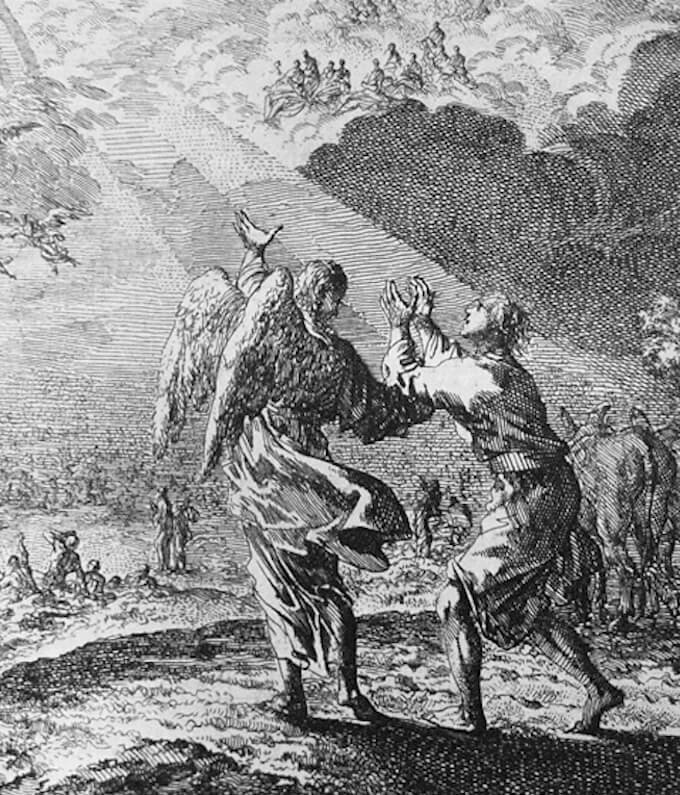
The true believers in Jesus Christ have been raptured (taken instantly to heaven), leaving non-believers behind on Earth, now a shattered and chaotic world. As people scramble for answers, an obscure Romanian politician named Nicolae Jetty Carpathia rises to become secretary-general of the United Nations, promising to restore peace and stability to all nations. What most of the world does not realize is that Carpathia is actually the Antichrist foretold in the Bible.
Coming to grips with the truth and becoming born-again Christians, airline pilot Rayford Steele, his daughter Chloe, their pastor Bruce Barnes, and young journalist Cameron “Buck” Williams begin their quest as the Tribulation Force to help save the lost and prepare for the coming Tribulation, in which God will rain down judgment on the world for seven years.
Multiple books in the series have been on the New York Times Bestseller List. Starting in 2000, Books 7 and 8 reached number one on the list followed by book 10, which debuted at number one. In 2016, several books in the series were bestsellers and 65 million copies were sold in various languages. One reason often cited for the books’ popularity is the quick pacing and action, and that they reflect the public’s overall concern and fascination with the Apocalypse as portrayed in the biblical book of Revelation.
Laurie Goodstein, writing in 1998 for The New York Times, placed what she called the “Left Behind phenomenon” in the calendrical context of the approaching year 2000. Goodstein noted a ‘proliferation’ of similarly apocalyptic texts appearing at that time, by authors such as Jim Bakker and John Hagee. Goodstein cited the opinion of University of Wisconsin historian Paul Boyer, who described such authors as “cashing in on the public preoccupation with the year 2000”.
Marisa Ronan places the series in the context of the American Century and American exceptionalism, “proving at the fin-de-siècle that not only was the twentieth century American, it was Christian”. Ronan notes that American evangelicals are portrayed as taking center stage in the apocalypse, fighting a spiritual battle against the UN’s successor – headed by the Antichrist – which in part seeks to usurp the superpower status of the United States
While writing that the series fulfills the norms of mass-market fiction, magazine writer Michelle Goldberg also characterized the books as an attack on Judaism and liberal secularism, and suggested that the near-future “end times” in which the books are set seem to reflect the actual worldview of millions of Americans, including many prominent conservative leaders.
Several scholars comment on the series’ setting in time: religious studies scholar Mark Juergensmeyer argues that the Left Behind books are seen as fictional representations of future events, drawing a connection between the future violence portrayed in the books and “the violence in imagined worlds in the here-and now”.
The series’ focus on apocalypticism, totalitarian conspiracies, and militias has been noted by writers including Gershom Gorenberg, Michael Joseph Gross, and Andrew Strombeck. They note themes such as fear of one-world government (in the form of the United Nations led by the Antichrist), global religion, and global currency – fought against by militias “structurally equivalent to Christians”. University of Notre Dame religion scholar Jason Springs regards the series’ apocalypticism as one aspect that would later feed into the evangelical adoption of QAnon.
Some practicing Christians, evangelical and otherwise, along with non-Christians have shown concern that the social perspectives promoted in the Left Behind series unduly sensationalize the death and destruction of masses of people.
Harvey Cox, a professor of divinity at Harvard, says part of the appeal of the books lies in the “lip-licking anticipation of all the blood”, and Lutheran theologian Barbara Rossing, author of The Rapture Exposed: The Message of Hope in the Book of Revelation, said the books glorify violence. Additionally, Paul Nuechterlein accused the authors of re-sacralizing violence, adding that “we human beings are the ones who put our faith in superior firepower. But in the Left Behind novels, the darkness of that human, satanic violence is once again attributed to God”.
David Carlson, a Professor of Religious Studies and a member of the Greek Orthodox Church, wrote that the theology underpinning the Left Behind series promotes a “skewed view of the Christian faith that welcomes war and disaster, while dismissing peace efforts in the Middle East and elsewhere—all in the name of Christ”
The books are written from a Protestant viewpoint. Some believe the books are anti-Catholic, noting that many Catholics were not raptured, concluding that no religion is free of false converts and that the new pope establishes a false religion.
While the fictional Pope, John XXIV, was raptured, he is described as “promoting Lutheran reform”, and it is implied that he was raptured for this reason. His successor, Pope Peter II, becomes Pontifex Maximus of Enigma Babylon One World Faith, an amalgam of all remaining world faiths and religions. Catholic Answers describes the series as anti-Catholic. – Wiki
Next post – AMERICAN CRUSADE:
Feb 15, 2025 10:31:43 pm
