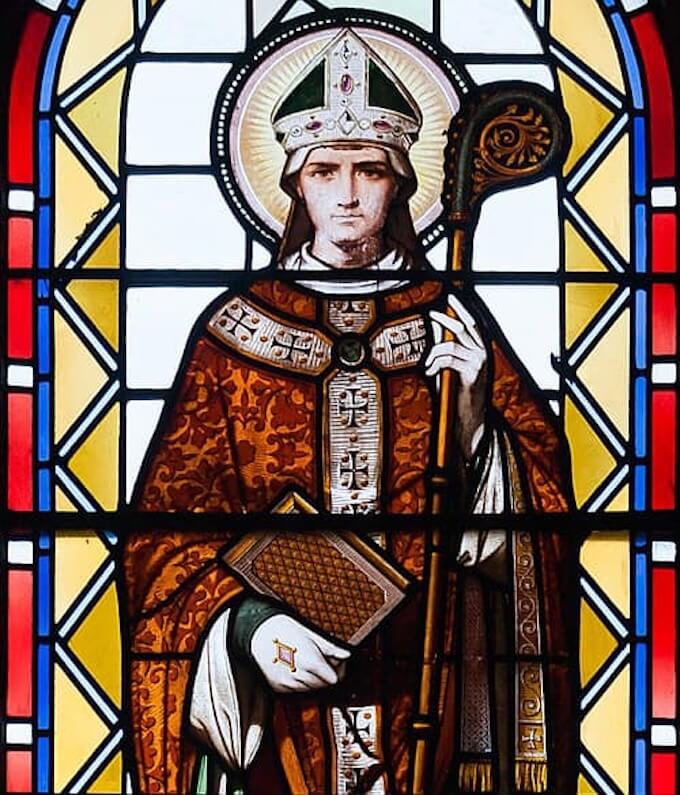
PETER THE ROMAN: – The death of Pope Francis on April 21, 2025, reignited debates about a 900-year-old enigmatic text known as the Prophecy of the Popes. Attributed to the Irish archbishop Malachy, the document, supposedly written in 1139, lists 112 popes who would lead the Catholic Church until the end of times.
According to interpretations, the final pope, named “Peter the Roman,” would guide the Church through great tribulations, culminating in the destruction of the “city of seven hills”—a reference to Rome—and the final judgment.
Discovered in 1595 by Benedictine monk Arnold Wion in the Vatican archives, the prophecy returned to the spotlight after Francis’ death, with speculation that the next pope could be the last or that Francis himself marked the end of the Roman Church.
While some see apocalyptic signs in global events like wars and international tensions, others question the text’s authenticity, pointing to possible political manipulations in the 16th century.
DUBIOUSLY VAGUE: Malachy, a 12th-century Irish cleric, is described as a reformer who aligned the Irish Church with Roman Catholic practices. During a visit to Rome, he reportedly had a vision of the 112 popes, which he recorded in the prophecy. The text, however, was only revealed four centuries later, raising doubts about its origin. For some, the accuracy of descriptions up to 1590 contrasts with the vagueness of later predictions, suggesting the document may have been crafted to influence the papal election of that year.
Interest in the prophecy has grown amid global crises. The war in Ukraine, ongoing for over three years, tensions between the United States and China, and conflicts in the Middle East fuel interpretations that the world is nearing collapse. Francis’ death at 88, after 37 days hospitalized for pneumonia, intensified these speculations, with esoteric groups and conspiracy enthusiasts pointing to the prophecy as an imminent warning.
The prophecy suggests the end of the Church or world would occur 442 years after 1585, pointing to 2027.
Some link Francis to Peter, while others expect a new pope with that name. Experts suggest the text was manipulated in the 16th century to favor specific candidates.
Despite controversies, the prophecy captured the imagination of the faithful and esoteric enthusiasts. With each pope’s death, speculations resurface, especially in times of crisis. Francis’ death, in a context of global instability, reinforced the narrative that the world is approaching a catastrophic event, predicted for 2027, according to some interpretations of the text.
THE POLITICS OF GOD: The 1590 papal election is key to understanding doubts about the prophecy’s authenticity. After the death of Urban VII, who reigned for only 12 days, the conclave saw a heated contest among cardinals. Girolamo Simoncelli, backed by Italian factions, was a strong candidate, and some believe the Prophecy of the Popes was created or altered to favor his candidacy. The motto for the 1590 pope, “De rore caeli” (From the dew of heaven), was interpreted as a reference to Simoncelli’s coat of arms, but Niccolò Sfondrati’s election thwarted those expectations.
The accuracy of descriptions up to 1590, including details like names, religious orders, or specific events, suggests the text was written or revised at that time. Post-1590 mottos become vague, such as “Burning fire” or “Depopulated religion,” allowing broad interpretations that fit nearly any pontificate. This shift led historians to question whether Wion, or someone close to him, fabricated the text for political purposes.
The Catholic Church has never officially recognized the prophecy, and theologians consider it apocryphal. Yet, its popularity persists, fueled by literary works like Glenn Cooper’s The Last Pope and documentaries exploring apocalyptic theories. Francis’ death brought renewed attention to the text, with debates about its relevance in a world marked by conflict and uncertainty.
PETER THE ROMAN: The Prophecy of the Popes gained new life in the 21st century, particularly after the elections of Benedict XVI in 2005 and Francis in 2013. Benedict XVI’s motto, “Glory of the olive,” was linked to the Benedictine order, known as Olivetans, while Francis’ “Peter the Roman” sparked speculation due to the absence of a pope with that name. Some interpret Francis, as the first Jesuit and Latin American, as a break from tradition, while others await a future pope named Peter.
Global events have intensified discussions. The war in Ukraine, ongoing since 2022, has caused over 500,000 casualties, including deaths and injuries, according to UN estimates. Tensions between the United States and China, with trade and military disputes in the South China Sea, fuel fears of global conflict. In the Middle East, escalating violence between Israel and groups like Hamas, with over 40,000 deaths since 2023, reinforces perceptions of instability.
These scenarios are seen by some as the “tribulations” foretold by Malachy. The prophecy is also debated in online forums and social media, where esoteric and religious groups analyze the mottos for clues. The year 2027, calculated as 442 years after the text’s supposed 1585 writing, is cited as the time of the Church’s or world’s end.
THE FINAL POPE. Francis’ death, after a 12-year pontificate, heightened these speculations, with many questioning whether the next conclave will elect the final pope.
The current context amplifies the prophecy’s allure. Beyond armed conflicts, the world faces challenges like climate change, with global temperatures rising 1.2°C since pre-industrial times, and migration crises, with 281 million international migrants in 2024, according to the IOM.
These issues, combined with political polarization in countries like the United States and Brazil, create an uncertain scenario that fuels apocalyptic narratives.
Francis’ death, as the first Latin American pope, was a milestone. Elected in 2013, he led the Church with a focus on mercy, interfaith dialogue, and social justice, but faced resistance for his openness to issues like LGBTQIA+ rights and critiques of capitalism.
His frail health, marked by hospitalizations in 2024 and 2025, culminated in his death from respiratory complications. Global mourning, with millions following the funeral rites in Rome, reignited interest in the papal succession and Malachy’s prophecy. – Catholic News
Apr 22, 2025 1:31:46 pm

