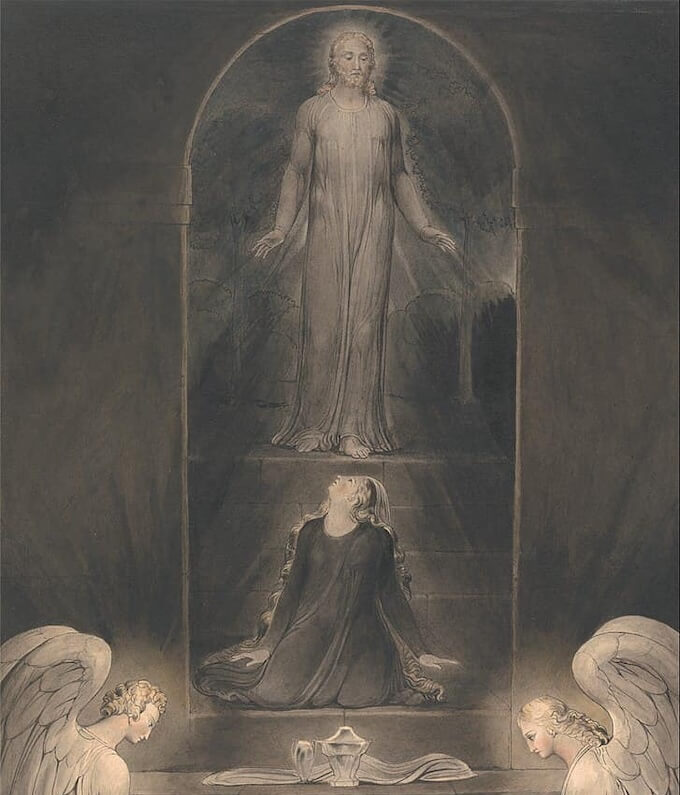
The stories in the Bible makes the most sense when interpreted from the perspective of Stellar Theology. It is certainly possible that Jesus and Mary were actual people, but much more likely that they were archetypes of the planet Venus and the Sun. To confuse matters, they represent different Stellar phenomena depending on the context of the story.
For example, Jesus can be connected to Mercury as the Messenger, the Sun of Righteousness, Orion, the Pleiades, Leo, Spica, and the Bright Morning Star, Venus. Mary in turn can be connected to Venus and Sirius amongst others.
If we apply this thinking to Mary’s search for Christ after his burial as portrayed in the Gospel of John, a deeper meaning emerges.
20:1 The first day of the week cometh Mary Magdalene early, when it was yet dark, unto the sepulchre, and seeth the stone taken away from the sepulchre.
Initially Mary doesn’t find Jesus because she is the Morning Star. Venus rises before the sun and it is only after a certain period of time elapses, the duration depending on where the planet is during its eight yearly cycle, that the sun itself rises. That’s why she can’t find him, and then all of a sudden he appears out of nowhere as the sun rises.
Understanding the importance of the Sacred Marriage between the Sun and Venus transforms our perspective on the myths and legends about the relationship between Jesus and Mary. Choosing to only focus on them as people and taking everything literally, stymies our level of comprehension.
The Hieros Gamos of divine masculine and feminine energies date to the time of King Solomon and the Queen of Sheba. The Temple itself was designed to facilitate this Sacred Union. The anointment of Jesus by Mary as described in the Gospels is a watered down version of the real thing.
This act was supposed to take place in the Bridal Chamber mentioned in the Gnostic Gospel of Philip. Philip directly links the Bridal Chamber to the Holy of Holies, the most sacred part of the Temple.
Mary Magdalen at the Sepulchre – William Blake 1805