1209-1229
Pope Innocent III, the same pope responsible for the mess of the Fourth Crusade, initiated the Albigensian Crusade in 1209. The Cathars lived in the Languedoc, an area roughly covering southern France. They were first mentioned in 1143 and fell out of favour with the powers that be due to their unique take on Christianity. Very little of their actual writings survived so it is difficult to fully grasp their beliefs. To complicate matters, beliefs tended to differ from region to region, without any fixed set of rules or dogma.
They seem to have believed in two different Gods, a good God of heaven, and a bad God of earth. The one ruled the spiritual world, and the other the physical. The good God was associated with the New Testament, and the bad one with Satan and the Old Testament. He was referred to as Rex Mundi, the demiurge, King of the World, the God of Judaism. Because Rex created the material world, it was tainted with sin. Human souls were angels that somehow got trapped and required salvation to escape the endless cycle of reincarnation. Because of this, sexual reproduction was seen to aid the cause of Satan and was therefore frowned upon. They only ate a pescatarian diet, no cheese, eggs, meat, milk, or any by-products from sexual intercourse.
They had some rather interesting ideas when it came to Jesus. He didn’t incarnate in physical form but only in spirit. They rejected the symbol of the cross, denied the Crucifixion, Resurrection, prayers to the Saints, the Eucharist, and believed John the Baptist was evil and impeded Jesus by introducing the false sacrament of baptism.
According to Piere des Vaux-de-Cernay, the Cathars believed the physical Jesus from the material world was evil, a false messiah, and was the lustful lover of Mary Magdalene. Some also believed Eve’s daughters copulated with Satan’s demons and bore giants, ideas found in the Book of Enoch. The sexual allure of women impeded a mans ability to reject the material world.
They also believed that human souls were sexless and therefore women could become spiritual leaders and teachers, not only men. Although later on it seems to have changed to a woman needing to be a man in her last incarnation to achieve salvation. They based their ideas about women being teachers on the role of Mary Magdalene (not sure if she incarnated or if she was also a spirit) and only focussed on the Gospel of John. They denied the validity of Peter being the chosen leader of the early church, and therefore rejected his authority, and by extension that of the Pope.
In 1143 or 1144, Eberwin, Prior of the Premonstratensian Abbey of Steinfeld wrote the following to Saint Bernard of Clairvaux.
Of themselves they say: “We are the poor of Christ, who have no fixed abode and flee from city to city like sheep amidst wolves, are persecuted as were the apostles and the martyrs, despite the fact that we lead a most strict and holy life, persevering day and night in fasts and abstinence, in prayers, and in labour from which we seek only the necessities of life. We undergo this because we are not of this world. But you, lovers of the world, have peace with it because you are of the world. False apostles, who pollute the word of Christ, who seek after their own interest, have led you and your fathers astray from the true path. We and our fathers, of apostolic descent, have continued in the Grace of God and shall so remain to the end of time. To distinguish between us and you Christ said “By their fruits you shall know them”. Our fruits consist in following the footsteps of Christ.
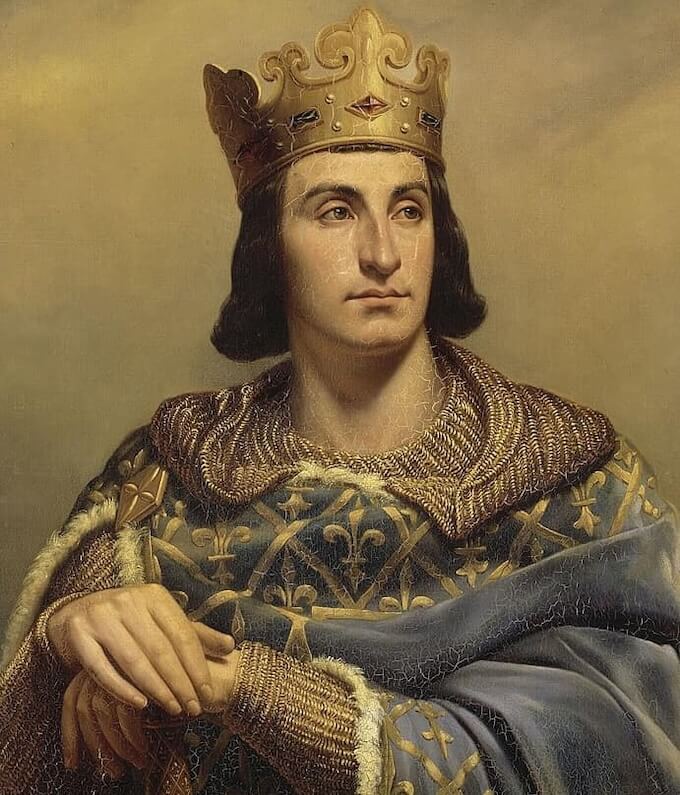
With the blessing of French King Philip Augustus, the Northern Barons under leadership of Simon de Montfort and Cistercian Abbot Arnaud-Amaury, went on a genocidal rampage to stamp out the heresy, but even more importantly, to steal from, rob, murder, rape, and brutalise the Cathars and their land. Although the French King didn’t officially participate, he gained the most from the multiple massacres committed in the Name of God. The Medieval Inquisition followed soon after and dealt an almost fatal blow to the Cathars and the people of the Langeudoc.
The Massacre at Beziers on July 22, 1209, the Feast Day of Mary Magdalene was the first mass murder of both Cathars and Catholics by the Crusaders. They spared no one. Women, men, children, the elderly. 7000 people are said to have taken refuge in the church of Saint Mary Magdalene. They were forced out, blinded, tortured, dragged through the streets, and slaughtered on mass. Some were even used as target practice. Worst of all, the Crusaders bragged about their deeds to the Pope.
The siege of Minerve in 1210, a different town in the area ended on July 22, the Feast Day Mary Magdalene. The townsfolk were given a choice, repent or burn. 3 repented, and 140 chose to be burnt at the stake. Some even willingly ran towards the fire and hurled themselves on the pyre. The Crusade continued for 20 years, and to this day descendants of the Cathars remember the unholy justice meted out their ancestors. It remains a very dark stain on both the institutions of the Catholic Church and French Monarchy.
“The North and the South of what is now France were, in the twelfth century, two different countries, as different as France and Spain are today. The people of each country disliked and distrusted those of the other. The northerners thought the southerners were undisciplined, spoiled by luxury, a little soft, too much interested in social graces, too much influenced by contemptible people such as businessmen, lawyers, and Jews. The southerners thought the northerners were crude, arrogant, discourteous, uncultured, and aggressive. The climate was such that if war were to break out between the two countries it was sure to be long and bitter”. Historian Joseph Strayer.
King Philip ll of France